
Introduction
Water treatment plants across Southeast Asia, Africa, and South America face persistent operational challenges. Power instability, membrane fouling, and fluctuating chemical costs burden operators striving to meet rising demand and regulatory compliance. Clean technology is reshaping this landscape by reducing downtime, slashing energy consumption, minimizing chemical usage, and mitigating compliance risks.
Ocpuritech leads this transformation with integrated, operator-centric solutions that enhance water treatment plant performance while committing to environmental responsibility. This article unveils advancements empowering plant operators to optimize key performance indicators (KPIs) and boost business return on investment (ROI) through sustainable, efficient technologies.
1. The Current Landscape of Water Treatment Plants: Challenges and Opportunities
1.1 Operational Pain Points Faced by Plant Operators
Operators frequently grapple with severe membrane fouling that triggers unplanned downtime, disrupting supply continuity. Power instability in many emerging markets causes plant shutdowns or reduced treatment capacity. Additionally, chemical and energy costs fluctuate unpredictably, complicating operating expenditure (OPEX) management and budget forecasting.
1.2 Fragmented Procurement and Integration Challenges
Many plants depend on multiple vendors for different system components, creating gaps in accountability. During equipment failures, finger-pointing delays troubleshooting and resolution, extending downtime and risking water quality. Fragmented procurement complicates maintenance logistics and operator training.
1.3 Importance of Operator-Centric Solutions
Plant operators are often overwhelmed by complex, noisy alarm systems providing little actionable insight. Cognitive overload results in slow reactions to critical events. There is a pressing need for solutions offering real-time, relevant information that reduce alarm floods and cut reaction times, improving operational efficiency and safety.
2. Clean Tech Innovations Revolutionizing Water Treatment Plants
2.1 Remote Control Reverse Osmosis Systems

Remote control reverse osmosis (RO) systems powered by IoT enable continuous automated monitoring and centralized control. For example, Ocpuritech’s remote RO systems provide operators with real-time alarm triage and diagnostic tools accessible offsite. This dramatically reduces response times. In an Indonesian beverage plant I worked with, diagnosis time dropped from 90 minutes to just 12 minutes after deploying IoT-enabled alarm management, slashing unplanned downtime and improving water supply reliability.
2.2 Pretreatment Synergies
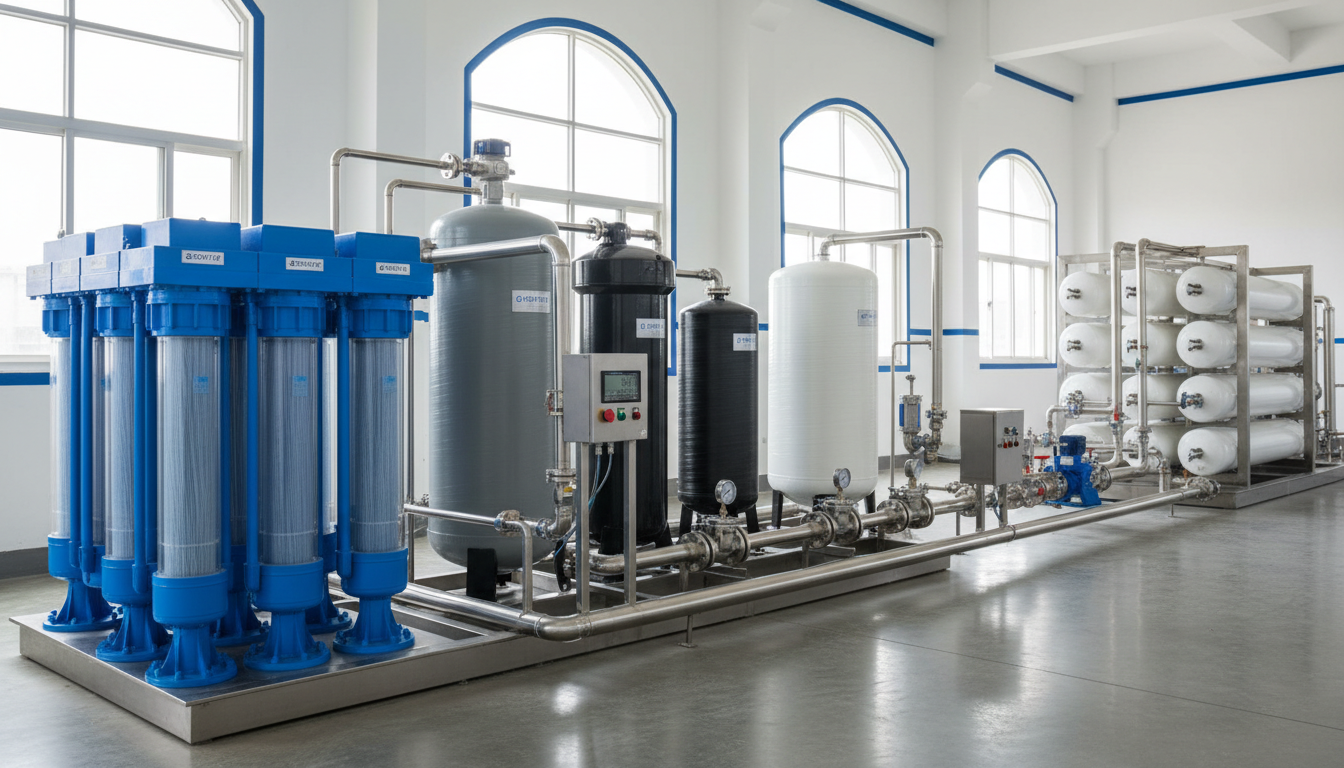
Pretreatment systems combining ultrafiltration (UF), sand and carbon filters, and softening create synergies that stabilize the silt density index (SDI). This stabilization doubles cleaning-in-place (CIP) intervals for RO membranes, extending their effective lifespan and reducing chemical and labor costs. A municipal plant in West Africa implementing such an integrated system reported 50% fewer membrane replacements and consistent feedwater quality, directly reducing OPEX and downtime.
2.3 Energy Efficiency Breakthroughs in SWRO Systems

Energy efficiency has become a critical focus for seawater reverse osmosis (SWRO) plants. Variable frequency drives (VFD) for brackish RO pumps contribute about a 6% energy reduction by optimizing flow rates dynamically according to feedwater conditions. Energy recovery devices (ERD), such as pressure exchangers, further reduce consumption to as low as 2.08 kWh per cubic meter of water treated, setting 2024 benchmarks for sustainability.
| System Type | Energy Use (kWh/m³) | Notes |
|---|---|---|
| Conventional SWRO | 3.5 – 4.5 | Typical current plants |
| SWRO with ERD (e.g., PX Q400) | ~2.08 | State-of-the-art recovery devices |
| Experimental Ultra-Efficient | ~1.86 | Record-breaking Canary Islands plant |
Advances in SWRO technology are critical in combatting climate change and addressing water scarcity worldwide, aligning with research targeting energy consumption near the theoretical minimum of 1.06 kWh/m³ for systems handling seawater at 35,000 mg/l TDS.
2.4 Chemical-Free Disinfection: UV Systems
UV disinfection is replacing chlorine in many seawater treatment plants, especially in containerized seawater desalination units installed in island resorts. This eliminates risks associated with chemical handling and byproduct formation, improving operator safety and reducing environmental impact. Ocpuritech’s UV systems integrate smoothly with RO units, enabling chlorine-free disinfection with reliable pathogen control.
2.5 Electrodeionization (EDI) for Ultrapure Water

EDI technology eliminates the need for acid and caustic acid logistics, improving operator safety and reducing chemical waste. In a hydrogen production site I consulted for, adopting Ocpuritech EDI systems ensured ultrapure water quality with lower operational risks and simpler maintenance. This chemical-free approach supports sustainable industrial water treatment.
2.6 Integrated Bottled Water Production Lines
Ocpuritech’s integrated solutions combine RO/UF purification, UV disinfection, and filling machines in a streamlined production line. This reduces start-up time by up to two weeks and eliminates vendor integration gaps and finger-pointing. Bottled water production managers benefit from reliable, continuous operation that safeguards product quality and meets accelerated delivery demands.
3. Quantifying the Operator Experience: KPIs That Matter
3.1 Alarms Per Shift and Alarm Management
Advanced clean tech solutions reduce nuisance alarms by prioritizing critical alerts and filtering false positives. Operators regain focus and make faster decisions. In plants upgrading to remote monitoring and IoT systems, alarm counts per shift dropped by 60%, freeing time for proactive management rather than firefighting.
3.2 Diagnostics and Downtime Reduction
IoT alarm triage and remote diagnostics cut troubleshooting times dramatically. From diagnosis delays averaging 90 minutes with conventional setups, modern systems reduce it to as little as 12 minutes. This accelerates planned maintenance scheduling, prevents unplanned shutdowns, and improves overall uptime.
3.3 Operating Expenditure (OPEX) per Cubic Meter
By combining energy savings, chemical reductions, and stabilized pretreatment, clean tech reduces OPEX per cubic meter treated. Extended membrane life lowers replacement frequency and CIP labor. Here is a comparative table outlining estimated OPEX savings after adopting Ocpuritech technologies:
| Parameter | Before Upgrade | After Ocpuritech Upgrade | Improvement |
|---|---|---|---|
| Energy Consumption (kWh/m³) | 3.8 | 2.1 | 44.7% Reduction |
| Chemical Usage (kg/m³) | 0.5 | 0.2 | 60% Reduction |
| Membrane Replacement Frequency (Years) | 2 | 4 | 100% Increase |
| Annual OPEX ($/M m³) | 450,000 | 275,000 | 39% Savings |
These improvements directly enhance business margins and sustainability in water treatment plant operations.
4. Operator-First Transformation: Day-in-the-Life Case Vignettes
4.1 Plant Operator Perspective
With remote control and predictive alerts, shift supervisors can monitor plant health in real time from their dashboards. They detect and address power dips promptly by adjusting Variable Frequency Drives (VFD) and engaging Energy Recovery Devices (ERD) to stabilize feed pressure. This flexibility simplifies managing varied seawater salinity and turbidity typically encountered in coastal plants.
4.2 Maintenance Lead Scenario
Maintenance teams benefit from better scheduling of clean-in-place (CIP) cycles, now doubled in interval due to improved pretreatment. Proactive membrane replacements reduce manual intervention. The ability to detect signs of membrane fouling early via smart sensors helps avoid emergency shutdowns, making workload more predictable and less reactive.
4.3 Bottled Water Production Manager’s View
In integrated bottled water lines, reliability has jumped as UV disinfection and EDI ultrapure water production ensure consistent product quality. Reduced downtime from equipment failures means fewer missed deliveries and improved customer satisfaction. Start-up time is cut by nearly two weeks thanks to cohesive system design, enhancing market responsiveness.
4.4 Regional Focus: Southeast Asia, Africa, South America
These regions face frequent power instabilities and limited resource availability. Clean tech solutions adapted for such conditions enable remote monitoring and predictive maintenance to mitigate downtime. Localized designs accommodate varying seawater salinity and pollution levels, improving seawater filtration and desalination performance across diverse environments.
5. Ocpuritech: Enabling Rapid Deployment and Reliable Performance
5.1 Brand and Manufacturing Strength

Ocpuritech operates two standardized manufacturing plants spanning over 10,000 m² in Guangzhou and Jiangmen. These facilities support rapid assembly of complete RO, UF, SWRO, EDI systems along with extensive spare parts inventory, ensuring fast delivery and reliable, quality-guaranteed products to customers worldwide.
5.2 Product Portfolio Aligned with Clean Tech Trends
The product range covers industrial remote control RO, brackish RO, seawater desalination, ultrafiltration, nanofiltration, and electrodeionization technologies. Complementing these are commercial and household systems plus bottled water filling lines and all associated spare parts like filters, UV lamps, and flow meters, meeting diverse market needs with a clean tech focus.
5.3 Commitment to Environmental Responsibility
Under Mrs. Carrie Chan’s visionary leadership, Ocpuritech pursues universal access to clean, pure water with a strong emphasis on reducing chemical and energy footprints. Their solutions embody environmental stewardship, enabling sustainable water treatment that aligns economic benefits with ecological responsibility for 2024 and beyond.
6. Strategies for Selecting Clean Tech Vendors and Systems
6.1 Evaluating End-to-End Solutions vs. Fragmented Suppliers
Choosing vendors offering integrated systems is advantageous by simplifying troubleshooting and eliminating accountability gaps common with fragmented suppliers. End-to-end solutions enable seamless communication and faster resolution, vital for continuous operation and quality assurance in water treatment plants.
6.2 Importance of Fast Spare Parts Availability
Minimizing downtime depends heavily on rapid access to spare parts. Partnering with manufacturers having robust inventory and efficient shipping logistics ensures swift replacement of filters, membranes, UV lamps, or pumps, keeping plants running smoothly without extended outages.
6.3 Verifying Field-Tested ROI and Reliability Data
Pragmatic selection demands thorough evaluation of vendors’ documented return-on-investment (ROI) cases and endorsements from operators using their technology in similar environments. This mitigates risk and confirms reliability before significant capital investment.
6.4 Considering Local Conditions and Regulatory Compliance
Systems must be tailored to local power quality, feedwater variability including seawater salinity and contamination, and strict regulatory auditing requirements. Partnering with knowledgeable vendors ensures compliance and optimal plant performance under local constraints.
Conclusion
Clean technology is revolutionizing the water treatment plant experience. By centering on operators, solutions reduce downtime, enhance energy efficiency, and optimize OPEX. Ocpuritech’s integrated approach, backed by world-class manufacturing and environmental commitment, delivers measurable business value and sustainable operations.
Plant managers and operators are invited to evaluate their current systems against these clean tech advancements and consider rapid deployment of operator-centric solutions. Achieving cleaner, safer, and more reliable water treatment is attainable in 2024 and beyond by embracing these transformative technologies.
Performance evaluation of seawater reverse osmosis,
Practical minimum energy use of seawater reverse osmosis,
Seawater desalination and water reuse using FO-RO hybrid system
FAQs on Clean Technology Innovations in Water Treatment Plants
Q1: What is operator-centric technology in water treatment plants?
Operator-centric technology focuses on providing plant operators with real-time, actionable data and simplified alarms to reduce cognitive overload, enabling faster decisions and improved operational efficiency.
Q2: What are energy recovery devices (ERD) in seawater reverse osmosis systems?
Energy recovery devices, such as pressure exchangers, capture and reuse pressure energy within seawater reverse osmosis plants, significantly lowering energy consumption to about 2.08 kWh/m³, enhancing sustainability.
Q3: What is the role of electrodeionization (EDI) technology in ultrapure water production?
EDI technology produces ultrapure water without chemicals by continuously removing ions via electrically-driven membranes, improving safety and reducing waste in industrial applications like hydrogen production.
Q4: How to implement remote control reverse osmosis (RO) systems for better plant monitoring?
Implement by integrating IoT-enabled sensors with centralized dashboards to enable offsite real-time alarm triage and diagnostics, which shortens response times, minimizes downtime, and improves reliability.
Q5: How to optimize clean-in-place (CIP) cycles with integrated pretreatment systems?
Combine ultrafiltration, sand/carbon filters, and softening to stabilize feedwater quality, which doubles CIP intervals, reduces membrane fouling, lowers chemical use, and decreases labor costs.
Q6: How to select clean tech water treatment vendors for reliable operations?
Evaluate vendors offering end-to-end integrated solutions, fast spare parts availability, documented ROI data, and systems tailored to local regulations and feedwater conditions to ensure accountability and performance.
Q7: Why is reducing alarm floods important in water treatment plant operations?
Reducing alarm floods prevents operator cognitive overload, enabling focused responses to critical issues, quicker troubleshooting, and enhanced plant safety and efficiency.
Q8: Why choose integrated water treatment lines over fragmented systems?
Integrated lines eliminate vendor gaps and accountability issues, simplify operator training and maintenance logistics, reduce start-up time by up to two weeks, and provide continuous, reliable operation.
Q9: What is the difference between conventional SWRO and ultra-efficient SWRO systems?
Conventional SWRO systems consume 3.5–4.5 kWh/m³, whereas ultra-efficient SWRO systems, like those in the Canary Islands, use about 1.86 kWh/m³ by combining advanced ERDs and optimized pumps, resulting in significantly lower energy costs and carbon footprint.


