
Introduction
Water treatment plants in emerging markets face increasing challenges from feedwater variability, power volatility, and skilled operator shortages. This article presents a pragmatic, operator-focused analysis of future-proof water treatment plant technologies designed for resilience in Southeast Asia, Africa, and South America. Leveraging Ocpuritech’s proven modular systems, advanced monitoring, and maintainability strategies, this guide outlines actionable trends to optimize plant uptime and reduce OPEX amidst resource constraints.
1. Understanding the 3V + 3M Framework for Resilient Water Treatment Plants
1.1 The 3V Challenges: Variability, Volatility, Vacancies
Emerging market water treatment plants contend with three interconnected challenges. First, variability arises from fluctuating feedwater quality, such as turbidity spikes during monsoon seasons or seawater intrusion in coastal zones, which can affect process stability. Second, volatility refers to unreliable and intermittent power supplies combined with inconsistent chemical availability. Finally, vacancies denote the scarcity of trained operators, leading to maintenance delays and errors that compromise plant performance.
1.2 The 3M Solutions: Modularization, Monitoring, Maintainability
To address these challenges, the 3M framework offers pragmatic solutions. Modularization employs containerized and skid-mounted systems allowing rapid deployment and scalable capacity. Monitoring utilizes offline-first remote control systems equipped with dual-SIM GSM/LTE gateways, ensuring robust performance even in low-bandwidth environments. Maintainability emphasizes standardized spare parts with a global logistics network guaranteeing 72-hour availability, significantly reducing downtime.
1.3 How Ocpuritech Implements the 3V + 3M Framework
Ocpuritech’s implementation includes containerized RO, NF, and UF skids coupled with standardized FRP tanks to enable fast, modular setups. Remote control RO systems deployed in Indonesia and Ghana incorporate uplink capabilities for real-time adjustments. Their dual-factory supply chain in Guangzhou and Jiangmen ensures parts availability across Southeast Asia, Africa, and South America, enhancing operational resilience.

2. Advanced Pretreatment Technologies to Manage Feedwater Variability
2.1 Ultrafiltration (UF) as Essential Pretreatment for Turbid Water
Ultrafiltration (UF) plays a vital role in managing seawater water and freshwater feedwaters with high turbidity levels, such as those caused by monsoon-induced colloidal organics. UF efficiently reduces suspended solids, which stabilizes downstream RO membrane performance. Features like auto-backwash and variable flux accommodate sudden turbidity spikes, ensuring operational continuity. For example, in a Thai beverage plant, UF pretreatment successfully reduced the Silt Density Index (SDI) below 3, enhancing overall water quality.

2.2 Sand, Carbon, and Softener Filters for Scalable Pretreatment
Sand, carbon, and softener filters are instrumental in removing suspended solids, organic compounds, and hardness ions that can impair membrane longevity. These units integrate seamlessly with modular skid-mounted systems, enabling rapid installation and flexible customization. Ocpuritech offers a comprehensive pretreatment product range tailored for diverse water qualities, providing scalable solutions for industrial and municipal clients.
2.3 Selecting Pretreatment Based on Water Source and Salinity
Feedwater salinity, whether brackish, seawater, or variable due to seawater intrusion, dictates pretreatment strategies. Nanofiltration (NF) membranes selectively remove dissolved salts and organics, optimizing feedwater before RO. In coastal regions, tackling seawater salinity fluctuations ensures membrane protection and energy efficiency. Monitoring the density of seawater and its chemical composition enables adaptive pretreatment adjustments, enhancing plant resilience.
3. Innovative Treatment Technologies to Enhance Plant Performance
3.1 Reverse Osmosis (RO) System Design for Resource-Limited Environments
RO systems tailored for emerging markets incorporate low-pressure membranes and variable frequency drive (VFD) pumps, increasing energy efficiency and reducing operating costs. Energy recovery devices specifically designed for seawater desalination lines optimize power consumption, a key factor where electricity is volatile. Balancing CAPEX and OPEX is critical for clients like beverage factories, schools, and hospitals striving to deliver clean water sustainably.

3.2 Electrodeionization (EDI) and Nanofiltration (NF) for Specialized Water Needs
EDI stacks are increasingly adopted for ultrapure water applications such as photovoltaic panel manufacturing, hydrogen production, and cosmetics. They provide continuous ion removal without chemical regenerants. NF membranes target selective contaminant removal, decreasing chemical consumption and environmental impact. A commissioning project in a Peruvian laboratory demonstrated successful EDI integration, achieving ultrapure water standards with reduced maintenance demands.
3.3 Seawater Desalination Trends and Challenges
Containerized seawater desalination plants are gaining traction in coastal communities and resorts, offering turnkey solutions with rapid deployment. Addressing variable factors like seawater density, salinity, and biofouling through integrated control and pretreatment is essential. A West African resort implemented a modular seawater RO system combined with a bottle-filling line, generating potable water onsite with significant operational savings and sustainability gains.

4. Robust Monitoring and Control Systems for Power Volatility and Operator Vacancies
4.1 Offline-First Remote Monitoring Technologies
Offline-first remote monitoring makes use of dual-SIM GSM/LTE gateways with embedded edge logic, ensuring plant control continuity during power or network outages. Real-time alerts allow remote setpoint adjustments, minimizing the need for onsite operator intervention. In Indonesia, remote-controlled RO systems routinely operate with zero onsite visits for routine tweaks, enhancing uptime and reducing labor costs.

4.2 Low-Bandwidth Solutions for Emerging Market Environments
Sensor and telemetry systems adapt to unstable telecom infrastructures found in many emerging markets by optimizing data packets and operating with low bandwidth. Predictive maintenance enabled by remote analytics drives fewer breakdowns. Analogous to off-grid telecom tower operations, these solutions maintain water plant reliability despite challenging connectivity conditions.
4.3 Training and Empowering Operators through Intuitive Interfaces
Simplified dashboards with clear alarm management reduce operator errors due to skill gaps. Remote coaching and diagnostics enhance operator confidence and proficiency, bridging workforce shortages. Empowering plant operators via user-friendly controls leads to better maintenance adherence and longer equipment life.
5. Maintainability Strategies to Lower OPEX and Reduce Downtime
5.1 Standardized Spare Parts and Global Logistics Support
Ocpuritech’s two large-scale factories in Guangzhou and Jiangmen span over 10,000 m², producing a comprehensive catalog of standardized spare parts including filter cartridges, UV lamps, FRP tanks, carbon filters, and flow meters. Their 72-hour parts dispatch model serves distributors in Southeast Asia, Africa, and South America, enabling quick replacements and minimizing downtime.

5.2 Modular Design to Facilitate Easy Maintenance and Expansion
Modular, plug-and-play skid and containerized modules simplify onsite servicing. Their scalable design allows operators to add capacity or replace components without halting plant functions, improving operational flexibility and future-proofing installations amid evolving demands.
5.3 Field-Tested Best Practices for Long-Term Plant Survival
Lessons learned from agriculture, hospitals, beverage factories, and bottled water production emphasize minimizing membrane fouling through targeted pretreatment and continuous monitoring. Chemical usage is optimized to extend equipment lifespan, reduce environmental impact, and maintain water quality.
6. Regulatory and Market Trends Influencing Future Water Treatment Plants
6.1 Emerging PFAS Drinking Water Guidelines and Implications
The U.S. EPA’s 2024 rule establishes Maximum Contaminant Levels for six PFAS compounds, highlighting the need for advanced treatment to remove these persistent chemicals from drinking water. The World Health Organization is concurrently revising PFAS guidelines globally, impacting design criteria for future water treatment plants. These regulations drive incorporation of technologies adept at PFAS mitigation.
PFAS drinking water regulations emphasize health protection and plant compliance.
6.2 Increasing Demand for Digital Transformation and Enhanced Water Governance
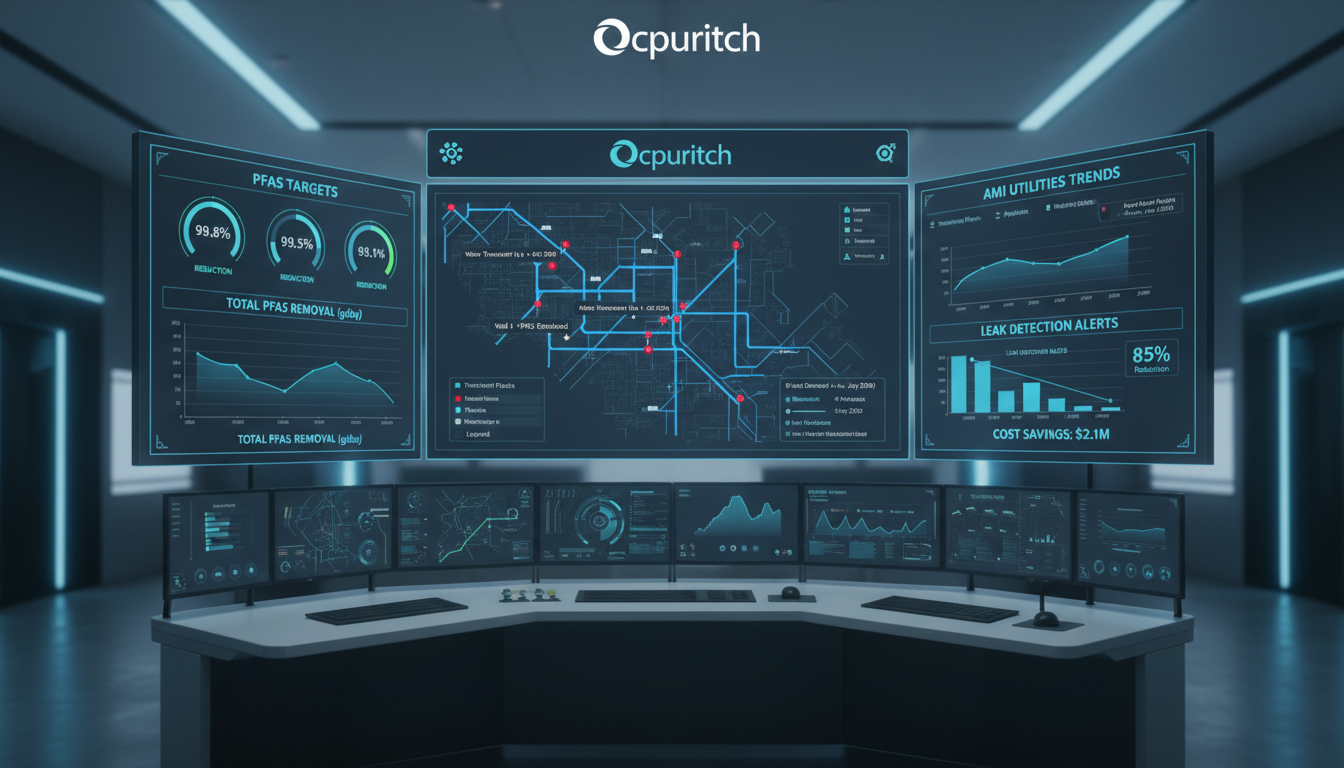
Water utilities are adopting integrated Geographic Information Systems (GIS) and Advanced Metering Infrastructure (AMI) to improve resource management and governance. Balancing sophisticated digital twins with practical offline controls provides emerging markets the resilience needed amid network uncertainties. These tools enable better water quality tracking and operational decision-making.
6.3 Market Opportunities and Challenges in SEA, Africa, and South America
The market expansion of municipal, industrial, commercial, and household water treatment systems in Southeast Asia, Africa, and South America presents promising growth opportunities. However, these regions demand solutions balancing cost, sustainability, and performance, especially under volatile resource conditions. Adopting future-proof, resilient technologies ensures water security and economic viability.
Summary and Call to Action
Future water treatment plants must prioritize resilience over pure technological novelty. Applying the 3V + 3M framework — managing Variability with advanced pretreatment, countering Volatility with robust monitoring, and addressing Vacancies through maintainability — equips plants to thrive in emerging markets. Ocpuritech’s field-proven modular systems, remote control solutions, and reliable parts supply exemplify sustainable practices for next-generation water treatment. Operators and project planners seeking dependable, scalable solutions can leverage these insights to deliver pure, clean water consistently, protecting communities and investments.
Appendix: How Ocpuritech Implements Each Trend
| Trend Aspect | Ocpuritech Solution Highlights | Mini Case Studies |
|---|---|---|
| Modularization | Containerized RO/NF/UF skids; standardized FRP tanks; modular pretreatment units | Thai beverage plant stabilizing feedwater quality |
| Monitoring | Remote Control RO System with dual-SIM GSM/LTE gateways; edge logic supporting offline operation | Indonesian and Ghana plants receive remote alerts and adjust settings without on-site visits |
| Maintainability | Two large-scale factories; global catalog of spare parts; 72-hour supply chain service | West African coastal resort running containerized SWRO with bottle-filling integration |
This detailed, pragmatic guide empowers decision-makers to select future-proof water treatment technologies that endure volatile resource environments, backed by authentic case studies and operational insights from Ocpuritech’s global deployments.
FAQs on Future Trends in Water Treatment Plant Systems and Technologies
Q1: What are the main challenges faced by water treatment plants in emerging markets?
Water treatment plants in emerging markets face three key challenges: variability in feedwater quality, volatility in power supply and chemical availability, and vacancies due to shortages of skilled operators, all affecting plant stability and performance.
Q2: What does the 3V + 3M framework in water treatment plants refer to?
The 3V + 3M framework addresses challenges of Variability, Volatility, and Vacancies with solutions of Modularization, Monitoring, and Maintainability to enhance resilience and operational efficiency in water treatment plants.
Q3: How does modularization improve water treatment plant operation?
Modularization uses containerized and skid-mounted systems for rapid deployment and scalable capacity, allowing easy expansion, simplified maintenance, and faster installation which help adapt plants to varying resource constraints.
Q4: How can advanced monitoring systems help manage power volatility in water treatment plants?
Advanced monitoring employs offline-first remote control technologies with dual-SIM GSM/LTE gateways and embedded edge logic, ensuring continuous plant control and real-time alerts despite power or network outages, reducing need for onsite operator intervention.
Q5: What are effective pretreatment methods to handle feedwater variability, especially in high turbidity conditions?
Ultrafiltration (UF) is essential pretreatment for turbid water, efficiently removing suspended solids and stabilizing RO membranes. Combined with sand, carbon, and softener filters, these reduce turbidity and hardness, accommodating fluctuating feedwater quality.
Q6: Why is maintainability important for water treatment plants and how is it ensured?
Maintainability reduces downtime and operational costs by using standardized spare parts stocked in global logistics networks for rapid 72-hour dispatch. Modular, plug-and-play designs facilitate easy servicing and capacity expansion without halting plant functions.
Q7: What are the differences between ultrafiltration (UF), nanofiltration (NF), and reverse osmosis (RO) in water treatment?
UF removes suspended solids and colloids for turbidity control; NF selectively removes dissolved salts and organics, optimizing feedwater quality; RO provides high-level desalination including seawater treatment. Each targets specific contaminants and operates at different pressures and energy requirements.
Q8: How do emerging regulations like PFAS guidelines impact future water treatment plant design?
Stricter PFAS drinking water regulations require advanced treatment technologies capable of mitigating persistent contaminants, prompting inclusion of specialized filtration and monitoring systems to ensure compliance and protect public health.
Q9: How does remote monitoring technology empower operators in regions with skilled manpower shortages?
Remote monitoring with intuitive dashboards and alarm management reduces operator errors and enables remote coaching and diagnostics, boosting operator confidence, enhancing maintenance adherence, and overcoming vacancies due to skill shortages.
Q10: What market trends are influencing the adoption of new water treatment technologies in Southeast Asia, Africa, and South America?
Growth in municipal, industrial, and commercial water treatment demand, coupled with resource volatility and sustainability concerns, drives uptake of resilient, cost-effective modular and digitalized water treatment systems tailored for emerging markets.


